
 Back
Back

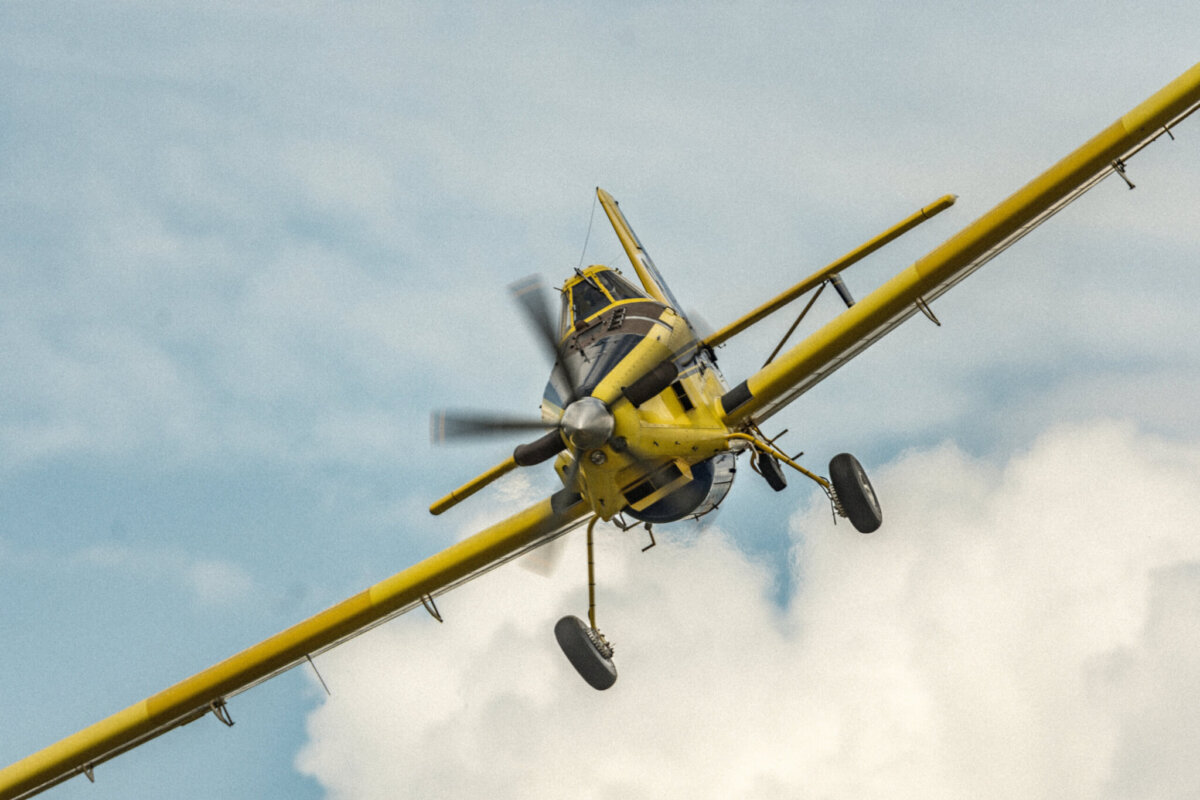

Enemy plane welcomes us to the conventional banana trade
Soon after we launched All Good Bananas, Simon and I (Matt) headed to Ecuador to hang out with our partners at AsoGuabo. While we were there, we decided to do a bit of “undercover” exploring to see what the conventional banana trade is really like. We drove into the heart of those massive plantations that stock the world’s supermarkets, and honestly? It felt like a graveyard. No birds, no frogs, not even a single wildflower—just an endless, bleak sea of identical trees and thousands of blue and white plastic bags trashed along the roadsides.
Things got pretty real while we were hitching a ride in the back of a ute between farms. The sky was perfectly clear, but suddenly it started “raining.” Then we heard the roar of a crop-duster. Before we could even dive for cover, we were absolutely soaked in a sticky, oily chemical cocktail. We’d been aerial-bombed. In the conventional world, this isn’t some weird accident; it’s a weekly ritual where they blast the land with insecticides and herbicides. That stuff was so oily it defeated our windshield wipers and made us feel physically sick. It was a huge wake-up call: the conventional industry has the resources of a small military, and they aren’t afraid to use them.
For the families living right next to these farms, the cost of all that “efficiency” is devastating. We’re talking about way higher rates of respiratory issues and cancers than you’d ever see elsewhere. (Cit: https://pmc.ncbi.nlm.nih.gov/articles/PMC7908553/ )
We met one farmer who told us the heartbreaking reason he walked away from the corporate giants. Every time they sprayed from the air, his family’s chickens—their main food source—would literally drop dead. Then his family started getting sick just from breathing the air. He joined Aso Guabo to finally get his health and his dignity back.
But here’s the good news: Aso Guabo is doing things totally differently. Instead of carpet-bombing the landscape, they’re using precision tech. They’ve ditched the chemical planes for smart drones with sensors that can spot exactly which plants need a little extra love. By mapping only the specific trees that are struggling, they can target treatments, massively cutting down on chemicals and keeping the local wildlife safe.
The innovation is everywhere. Aso Guabo even built a bio-fermentary plant that takes green banana waste and turns it into nutrient-rich, organic fertilizer. No more chemical dependency. By focusing on soil health, they’re growing stronger, more resilient plants that actually help the planet by acting as a carbon sink. Healthy soil doesn’t just grow better bananas; it helps heal the earth.
Because the growers share this organic fertilizer across their farms, they only use what they need, right at the roots. This builds up incredibly rich soil, which is the secret sauce for healthy roots and bigger banana bunches. When the soil is thriving, the need for pesticides basically disappears. The plants are naturally tougher against diseases and stress, and they soak up more CO2 from the atmosphere.
This is why the Fairtrade approach matters so much. When small-scale farmers actually own the business, they lead with empathy. They aren’t just looking at a crop; they’re looking at their kids’ future. By backing these growers, we aren’t just getting a better snack—we’re supporting a system that respects the land and the people who call it home.
That day in the back of the ute, drenched in a chemical cocktail, was a glimpse into a cold, industrial machine. But the innovations at Aso Guabo prove that the “aerial bombing” of our environment doesn’t have to be the status quo. Every time you choose a Fairtrade banana, you aren’t just making a healthy choice for yourself; you’re casting a vote against that oily rain and for a future where farmers, families, and the land itself can finally breathe easy.